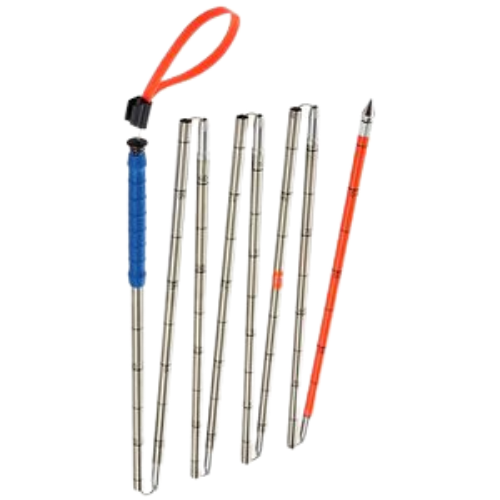
Choosing the Best Avalanche Probe – A Buyers Guide
The ideal avalanche probe should be simple to set up and operate. It should also be durable, long enough to reach the casualty beneath the snow, and transportable. When venturing into the backcountry, avalanche awareness is critical. You must have suitable equipment at all times.
Probe size: If you want it to be effective, a probe must be at least 2 meters long. A great majority of victims are buried at a depth of up to 2 meters. The chances of survival are highest when buried at a depth of 2 meters or less. All of the probes listed in our probe evaluations are between 240 and 320cm in length, so they will work well when you need them. There are two factors to consider while deciding on the appropriate length. A longer probe has a greater reach along with a stronger grip since you can keep your hands farther apart. It increases the effectiveness of probing and lowers the possibility of breaking the probe.
A longer probe will be bulkier, which is significant when you are carrying it in your ski bag all day. Moreover, you must also consider the size of the probe when packed. If it is small, it means the equipment can easily fit inside your backpack. Probes are often made up of numerous 40cm parts attached by a cord, although this might differ from one probe to the next, so double-check.
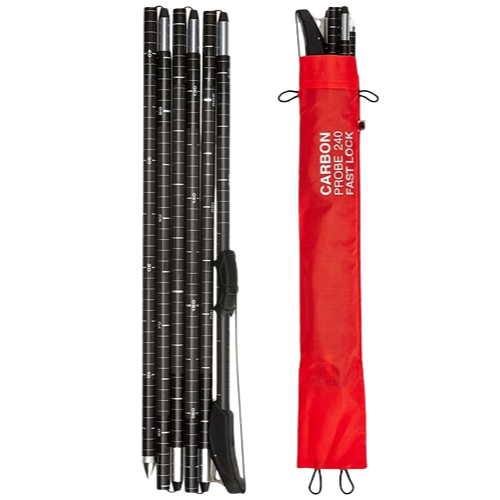
Probe material: The fabric adopted affects not just the probe's toughness and endurance, but also its weight. Carbon fiber, aluminum, and steel are the most widely utilized materials. Carbon fiber is no doubt the lightest and most handy material to carry all day. It is, however, quite expensive, and while it is fairly strong, it is more prone to breaking than the alternatives.
Aluminum probes offer the best combination of strength, weight, and affordability. It's still lightweight, but it's strong, and the probe is tough when investigating harder snow. Finally, we have steel probes, which are the most powerful. They are also the heaviest, which is the reason only search and rescue experts carry them.
Weight:Some types of skiing require minimal equipment since heavier gear causes tiredness more quickly. This also applies to probes, as they are part of your avalanche rescue equipment. The finest avalanche probes are light and robust when digging. However, this typically means that they are also more expensive.
User friendly:The probe must be ready for use within a fraction of minutes. The probe's structure and your skill level decide the speed and efficiency of use. The best avalanche probes are nearly instantaneously prepared for use. Then you release them by whipping and tugging on the cord.
A few probes, such as the iProbe, are suitable with transceivers and avalanche airbags, resulting in more efficiency. Whichever probe you receive, ensure you rehearse before dispatching it. Also, be careful to test with gloves and notice how long it takes to extract the probe out of the pack.
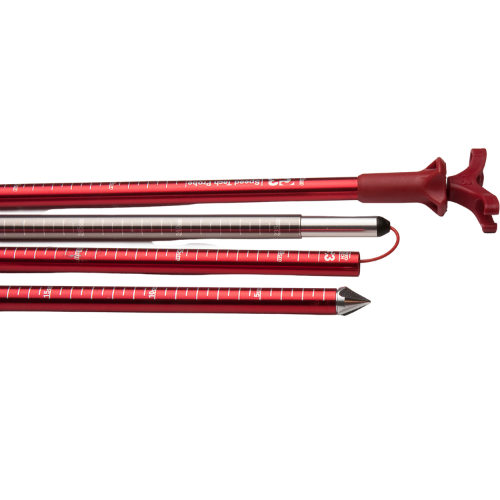
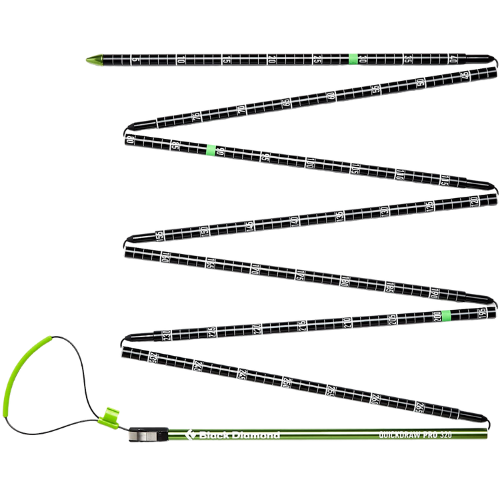
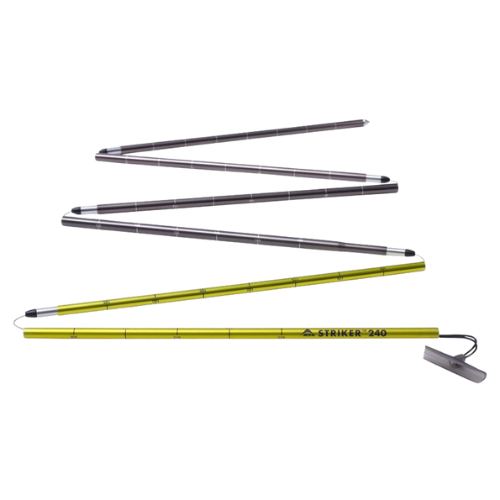
Is it handy enough?:Many modern probes are comprised of several segments linked by a cable, which snaps together when you pull on the cord. This is most likely the most practical. Ski poles that serve as avalanche probes are another option.
Though this may appear to be handier, it also means you'll spend more time removing the snow basket from the pole, and the probe will be shorter. Whatever type you pick, be sure it is ready to use right away.
Probe tip:While probing, the pole's effectiveness may be determined by the tip. A sharp tip penetrates the snow very efficiently and with less effort. Duller and broader tips, conversely, can generate bigger holes, which might be advantageous in a greater search area.
Probe diameter:The probe diameter is not uniform and fluctuates from one probe to another. A big ski probe diameter indicates that the probe is stronger, and thus less likely to bend or break. Unfortunately, this makes the probe heavier. Thus, some manufacturers shrink the diameter to minimize weight as well.
Probe depth markings:Usually, probes have etched depth marks, that are highly useful for search and rescue since they provide information on the victim's depth. In deathly settings, shallower victims have a higher chance of surviving and should be attended to first. The best avalanche search probes include markings that will not fade with use.
Probe storage:Your probe will come with or without a bag. So, though it may appear convenient, getting it out of the bag might take some time. If you carry the probe in a bag, ensure that you practice using it beforehand. One shouldn't be wasting valuable time when searching for avalanche victims.
FAQs
What is the purpose of an avalanche probe?
A metal rod used to sift through avalanche rubble in search of buried victims. Probes are a must-have in the backcountry. In an avalanche crisis, they can shave vital minutes off rescue timeframes. Foldable probes are easier to use than ski pole probes since they assemble quickly, are longer, and glide through the snow much more readily. A probe is a special-purpose pole. It's an essential piece of avalanche safety equipment that plays a critical role in assisting others in surviving an avalanche.
What kind of avalanche probe should you consider buying?
The length of your probe should be determined by the depth of your snowpack and the intended application. In shallower snowpacks, a compact probe may suffice. You may consider a long probe if you reside in an area with a deeper snowfall or travel to locations with a deeper snowpack.
How long should an avalanche probe be?
It is critical to consider the length of an avalanche probe. Typical lengths are 240cm, which is suitable for the normal avalanche burial depth. However, the probe must also be small and easy to store.
When should you use an avalanche probe?
When you've determined the victim's approximate location with an avalanche beacon, use a probe. Around that moment, you begin probing the snow until you come across the victim. The best avalanche probes improve the victim's chances of survival. However, you must follow a plan while probing and resist probing haphazardly.
What are the advantages of an avalanche probe?
The apparent advantage is that you are assisting in the lifesaving of someone. Avoid walking around and digging in the wrong place. A probe shows you where the victim lays buried. Correlating with this, you know where to dig. Another advantage is that snow depth may be measured as part of avalanche testing to determine if a region is safe.
Our Thoughts
Carrying the best avalanche probe with you when skiing in the backcountry is a wise and prudent decision. The probe is a critical piece of avalanche rescue equipment that plays a key role in locating avalanche victims. Look for a probe that is light and simple to carry. But it should also do the job when necessary.
Hopefully, you never have to use it. But avalanches are unpredictable and dangerous. So, it's always a good idea to be prepared. All of these probes are simple to use. Yet it is always advisable to test often. Try it out at home. Put your equipment to the test, and make sure it works. Being a competent probe striker can boost the chances of survival for buried avalanche victims.